 Petra Pan Film
A film by Petra Seliškar · 2023
Body
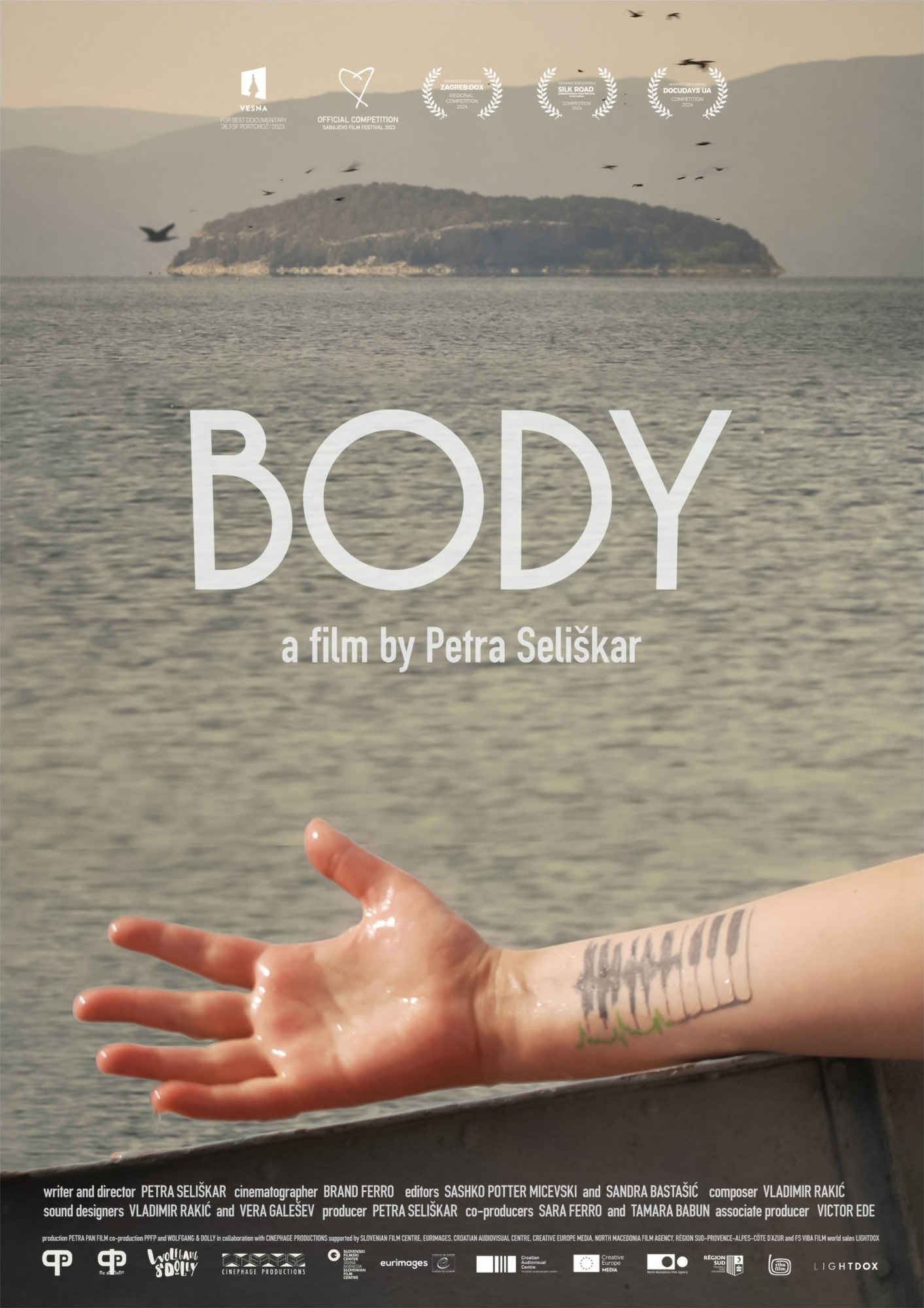
Filmed over a period of 20 years, Body is a sensitive and intimate exploration of the extraordinary life and intricate inner world of a woman who fights to resist a series of rare auto-immune diseases with her indomitable spirit.
- Country
- Slovenia, Croatia, North Macedonia
- Year · Length
- 2023 · 91 min
- Genre
- Creative documentary
- Format
- DCP
- World premiere
- Sarajevo Film Festival, August 2023, Documentary Competition
- World sales
- Lightdox
Body is a poignant feature documentary spanning two decades of Petra Seliškar's close friend Urška's extraordinary life, battling rare auto-immune diseases. Once a fashion model, now a professional pianist, Urška faces immense challenges, yet never loses her indomitable spirit.
The film blends intimate conversations, personal archives and creative visuals to explore the mysteries of the human body and the power of art and friendship to understand its essence. A tumultuous journey towards healing and self-acceptance.
A story of friendship, disease and filmmaking
There are rare and peculiar diseases in Urška's body that seem to come from nothing. But just as these illnesses must have a cause even if we don't recognise it, films that are as rare as this one come from a complex combination of experience, talent, wit, curiosity, instinct and finally, a little pinch of luck. They grow through situations in which a filmmaker finds themselves present “by chance”, and where a cinematic challenge seems to come to them on its own.
The long-lasting friendship between Petra and Urška put Petra in such a situation. Since they were young, the two friends have used to film each other often. Petra has kept a lot of beautiful archive footage about their friendship, the oldest materials hailing from the 1990s, when they were still teenagers, in the first decade after the breakdown of Yugoslavia. Later on, when Petra began to study cinema, this practice became more concrete, and the images more precise.
In 2003, as Petra and her partner, cinematographer Brand Ferro, were travelling around North Macedonia and discovering remote areas, people and stories, they ended up in the house of Mitko Filev. Brand knew him from his cine-amateur period, but suddenly they realised that Mitko has inherited the fortune-telling genes of his Grandma Vanga. They then decided to start working on a film entitled The Man Between Light and Shadow, and as they followed Mitko's healing activities, Urška soon jumped into the story “by chance”.
In 2004, after Urška's first collapse, Petra began to film her convalescence. The process was natural between the two friends. Soon enough, the exceptionality of Urška's medical profile and the history of their relationship resulted in the project of a film. But a few months after the collapse, Urška, struggling with a difficult recovery, asked Petra to stop filming. They kept seeing each other, but the idea of the film remained on stand-by. It was only seven years later, while Urška was slowly recovering from her stroke, that Petra received a phone call from her friend: “I would like us to finish this film”, she said. Petra, of course, had been waiting and hoping for such a moment to come.
She started again to follow Urška in her umpteenth return to life, her slow and laborious journey towards a complete and happy acceptance of her body and herself. In the film, little by little, the metamorphosis of the “character” occurs.
Recognition
- Prešeren Fund AwardSlovenia's national award for artistic achievement · Petra Seliškar, for Body and The Mountain Won't Move2026
- Vesna Award for Best Documentary FeatureFestival of Slovenian Film, Portorož2023
- Nominee, Heart of Sarajevo for Best DocumentarySarajevo Film Festival, Bosnia and Herzegovina2023
- Nominee, Big Stamp, Regional CompetitionZagrebDox, Croatia2024
- Nominee, DOCU/WORLD Best DocumentaryDocudays UA, Kyiv, Ukraine2024
- Nominee, Golden Silk Road Award for Best DocumentarySilk Road International Film Festival, Xi'an, China2024
2023
- Sarajevo Film Festival, Bosnia and Herzegovina · World premiere, Documentary Competition
- MakeDox, Skopje, North Macedonia · North Macedonian premiere
- Festival of Slovenian Film, Portorož · Slovenian premiere, Competition
- City of Women, Ljubljana, Slovenia
- CinEast, Luxembourg · Luxembourg premiere, CinéDocs
2026
- Trieste Film Festival, Italy · Italian premiere, Wild Roses
2024
- FIPADOC, Biarritz, France · French premiere, International Documentary
- É Tudo Verdade / It's All True, São Paulo, Brazil · Latin American premiere, International Competition
- ZagrebDox, Croatia · Regional Competition
- DOK.fest München, Germany · German premiere
- Beldocs, Belgrade, Serbia · Serbian premiere
- Docudays UA, Kyiv, Ukraine · Ukrainian premiere, DOCU/WORLD Competition
- UnderhillFest, Podgorica, Montenegro · Montenegrin premiere
- IceDocs, Akranes, Iceland · Icelandic premiere
- Silk Road International Film Festival, Xi'an, China · Chinese premiere, Competition
- Verzió Film Festival, Budapest, Hungary · Hungarian premiere
- DOKUDOC, Maribor, Slovenia
“A visually stunning and emotionally breathtaking piece of cinema.”
Marko Stojiljković, Cineuropa
“A little masterpiece.”
Melita Zajc, Modern Times Review
“Body is really body horror. You will feel it.”
Marcel Štefančič Jr., Mladina
“The power of the human spirit and film become one Body.”
Slobodna Dalmacija
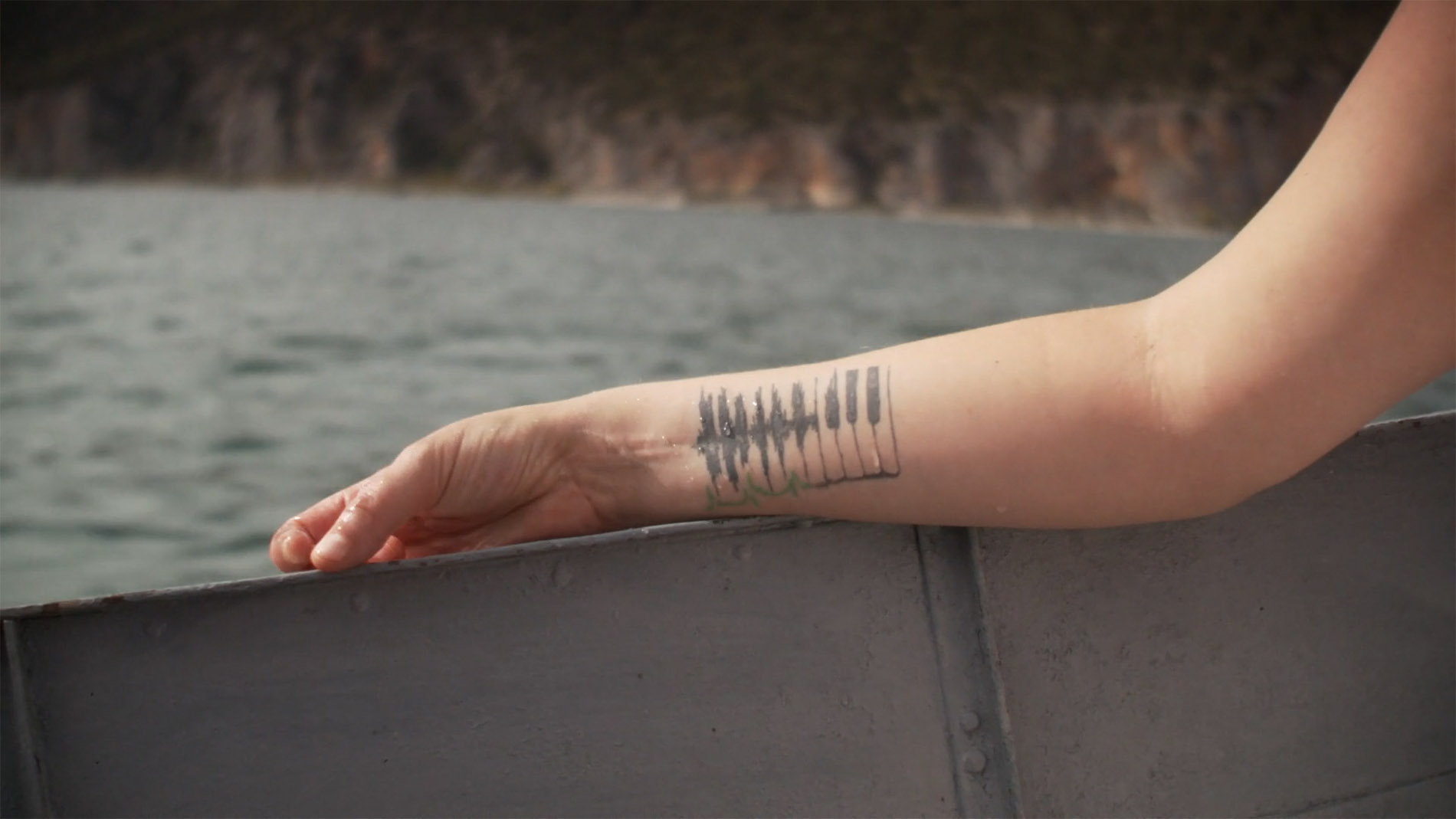
From the film
Stills © Petra Pan Film
Petra Seliškar
How did you and Urška meet?
We met in a Ljubljana bar when we were about 16 or 17. She was waiting tables there, and by then she had already left home. We both attended an experimental theatre school and that's where we clicked. There was also Tita, who appears in the film in the maternity ward scene. The three of us were very tight as we all grew up in messed up, complicated families. We rebelled with our strange haircuts and transgressive clothing, we basically screamed for attention because we preferred to be attacked and shouted at than to keep talking about the painful things we were experiencing at home. That must have been why we bonded so strongly, and we still have this bond to this day. But Urška's teenage years were particularly difficult for her.
You have been shooting with Urška for many years, on and off. When did you realise you had a film?
When Urška first came with Zoja to Macedonia in 2005, it was in order to escape Slovenia and her problems so we went to Lake Prespa to relax. She had wanted to stay for a week and ended up staying almost two months. She'd left all her problems behind, before that she was living with Zoja at the student campus as a single mother.
After swimming in Prespa, Urška got an infection and went back to Ljubljana. A few weeks passed and then Urška's sister called to tell us she was in a coma for six days. The scenes at Prespa were filmed only two weeks before the ones in the Ljubljana hospital.
I think I realised I could make a film when she had started walking again the first time she was hospitalised. I kept asking her to keep filming, but she kept refusing. Five years after her second collapse, at one point she suddenly called me on the phone and I heard her playing the piano. She was so thrilled she could play again, she invited me to come over and shoot. She realised that making of this film was also a sort of therapy for her, that it will help her understand what it was that happened to her. That was the key moment when I knew we had a film.
Can you tell us a bit about the healer, Mitko Filev, who appears in the film the first time she is in the hospital?
Actually these scenes were shot for a film about Mitko that I was making at the time, but which I never finished. On the eleventh day of Urška's coma, it was a critical situation. No fewer than 45 doctors had looked at her and they gave her a high-grade corticosteroid therapy but nothing helped. That's when I called Mitko. He started working with her remotely, and she woke up. It could be a coincidence, but it's a fact that it happened when he started working with her.
What comes out in those hospital scenes, but also throughout the film, is Urška's incredible positivity, she keeps laughing and making jokes.
She's had so many disasters in her life, from her parents who abused her to everything that happened later, but she has this eternal, invincible laughter. In fact, in the editing we had to tone it down and throw some of it out, because she keeps clowning around. I'm sure it's this defensive mechanism that kept her alive. She's simply like that. She is able to laugh at the most difficult things, her hospital stories are a total crack-up. That's why we had her read her diary in the voice-over, so that she could get into her deep, intimate issues.
“I wanted viewers to really feel it physically because it's something that words can't capture.”
How did you and Urška work together, and especially how did you develop these oneiric, nightmarish scenes that accompany her voice-over?
We started from Urška's diary and we used it to single out the key themes. I really needed her to work with me on the script because I wouldn't have been able to write how she felt, it had to be her. I would always consult her or even she would write some pieces that would end up in the treatment, but she never wanted to interfere in the film itself.
I wanted the viewer to feel physically as if they went inside the body and felt what Urška was feeling, all those pains and uncertainties. I was wondering how to enter this world and bring the audience into it. We tried to achieve it through music and sound design, together with composer and sound designer Vladimir Rakić. I wanted viewers to really feel it physically because it's something that words can't capture. It is a state between dreams, reality and the damage done by the illness and drugs. It takes a lot of energy to pull yourself out of it and to get back into the normal world, I find that extremely fascinating.
The visuals are pretty abstract because I didn't want to repeat what she says in the voice-over. We tried to represent the body on the cellular level, something that the audience travels through. It's a mix of microscopic images of cells and underwater scenes with the fish. These are actually arapaima fish from the Amazon that we shot in the Leipzig Zoo. They are so ugly that they are beautiful to me, I loved them. They fit perfectly what I imagined as a kid was on the bottom of the lake so I wanted them to represent her deepest fears.
Water is a very important element in the film: the film starts and ends at Lake Prespa, with 15 years passing in between.
We wanted to go back to Prespa because Urška had always been afraid of it. That's when she first told me on camera that she had wanted to commit suicide. I had no idea.
At one point she went to swim to the island which is 7.5 km away. She is a swimmer, and her relationship with water seems very natural, it seems like it is cleansing her. But in fact, water keeps pulling her down until she reaches the island. It is very symbolic, but back then I didn't see this connection clearly. Her subconscious, her family issues, her sexuality: all of this is pulling her down, drowning her. This murky lake water is actually illness, until she reaches the island, which in a way reconciles her with all these issues. She has found an inner balance there and when she swims back, there is no murkiness, we only film her on the surface, with birds flying above.
For me, the water means both illness and her subconscious that is drowning her, but on the other hand, when she opens up to me on camera, she releases all the horrors and, in a way, heals herself. It may sound preposterous, but it is a fact that since then she has been completely healthy. She still suffers consequences of all the strong drugs she had been taking for therapy for years, and when she stopped chemotherapy, she realised her body was not what it used to be and never will be. For a woman, this is very difficult, but she has accepted it, she has survived and she will keep living.
Petra Seliškar
Petra Seliškar (b. 1978 in Ljubljana) is a director, producer and writer. She has the ability to clearly see importance in hidden details, and through them, the essence in art, culture, nature, and all aspects of life. This is why she has dedicated her time on this planet to life's little pleasures, and of course, documentary cinema.
In 2003 she founded Petra Pan Film with cinematographer Brand Ferro, and in 2010 the two established MakeDox, the festival of creative documentary film in Skopje.
- The Mountain Won't Move, 2025
- My Summer Holiday, 2025 · for young audiences
- Body, 2023
- Farewell, 2020 · Special Award, Dok'n'Ritam Belgrade; Best Music Documentary, Grossman FF
- My World Is Upside Down, 2016 · Best Cinematography in a Documentary and Special Mention, SEE Film Festival Los Angeles
- Mama Europa, 2014 · Best Documentary, Tuzla FF; Trieste FF, Rotterdam IFF, Sarajevo FF
- Grandmothers of the Revolution, 2006 · IDFA, Jihlava IDFF; Small Stamp, ZagrebDox; Grand Prix, Asterfest Strumica
Crew & cast
- Writer & director
- Petra Seliškar
- Script consultant
- Tancrède Rivière
- Cinematography
- Brand Ferro
- Editors
- Sashko Potter Micevski, Sandra Bastašić
- Composer
- Vladimir Rakić
- Sound design
- Vladimir Rakić, Vera Galešev
- Production design
- Ciril Sadar
- Producer
- Petra Seliškar
- Co-producers
- Sara Ferro, Tamara Babun
- Associate producer
- Victor Ede
- Executive producer
- Brand Ferro
- With
- Urška, Bojan, Zoja and Mija Ristić, Mitko Filev, Maja Povše
Produced by Petra Pan Film (Slovenia), in co-production with PPFP (North Macedonia) and Wolfgang & Dolly (Croatia), in collaboration with Cinéphage Productions (France).
Supported by Slovenian Film Centre, Croatian Audiovisual Centre, North Macedonia Film Agency, Eurimages, Creative Europe MEDIA, Région Sud – Provence-Alpes-Côte d'Azur, FS Viba Film.
Developed with Ex Oriente Film Workshop, Eurodoc 2019, Last Stop Trieste 2022 (Flow Digital Cinema Award) and the International Documentary Association (IDA).
Body · Original soundtrack
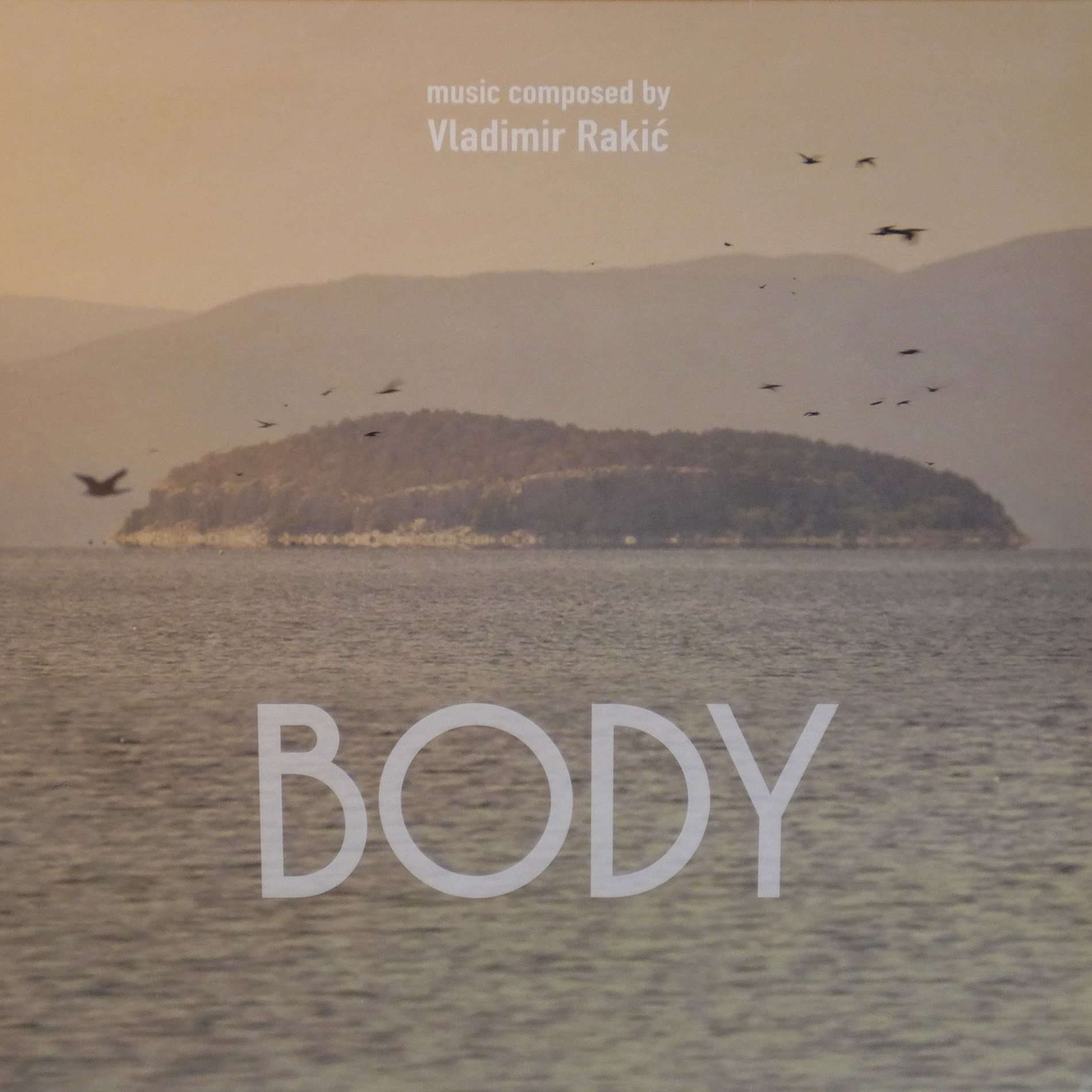
Vladimir Rakić's music for Body, released on vinyl as Body / Telo / Tjelo / Тело: fourteen pieces over two sides, from Painter Blue Opening to Beyond. Zither, cello, saxophones, prepared piano, violin, modular synth and sound objects, recorded at Berko Studio in Zagreb in November 2022. First pressing of 300 copies.
- Music composed by
- Vladimir Rakić
- Vladimir Rakić
- zither, cello (additional recordings), modular synth, electronics
- Vera Galešev
- sound objects
- Damir Kafka
- tenor and soprano saxophone, prepared piano
- Tena Novak
- violin, piano
- Neva Begović
- cello
- Recording engineers
- Vera Galešev, Berko Muratović
- Music producers
- Vladimir Rakić, Tijn Hazen
- Recorded
- Berko Studio, Zagreb, November 2022
- Photos
- Brand Ferro
- Cover design
- Vera Galešev, Slobodan Babić
- Pressing
- Deepgrooves · first print, 300 copies
- Published by
- Wolfgang & Dolly, Petra Pan Film, PPFP, Barbarogenije Records
ProductionPetra Pan Film
petrapanfilm@gmail.com
World sales & international pressLightdox · Bojana Marić
hello@lightdox.com
Regional pressPONTO agency · Sanija Hasanić
sanija@ponto.hr
Press kitDownload PDF (English)